
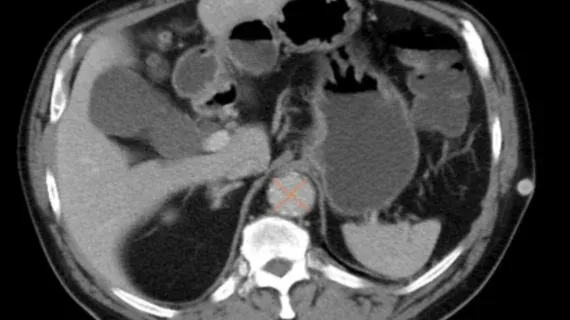
A commercially available AI tool increases the rate of incidental abdominal aortic aneurysm detection on CT scans.
Key Details
- 1The AI algorithm automatically measures aortic lumen size to flag possible AAAs on CT imaging.
- 2Incidental AAAs are reportedly detected in about 4% of emergency abdominal CTs, though some estimates are much higher.
- 3AI opportunistic screening aims to catch AAAs frequently missed in busy acute settings without disrupting radiologists' workflow.
- 4Few previous studies have evaluated the performance of such tools in large clinical settings.
Why It Matters
Radiologists in emergency and acute care settings may overlook incidental findings like AAAs, which can be life-threatening if untreated. Implementing AI-powered detection can improve patient safety and outcomes by identifying at-risk individuals earlier and more reliably.
Source
Health Imaging
Related News

•AuntMinnie
Study Reveals Major Impact of Incorrect AI Suggestions in Mammography Reads
Incorrect AI suggestions, especially false-negatives, significantly reduce reader sensitivity and alter visual search in mammography interpretation.

•Radiology Business
Framework Assesses Real-World Financial Impact of Radiology AI Adoption
A new analysis presents a financial calculator for objectively assessing the return on investment (ROI) of implementing radiology AI solutions.

•Radiology Business
AI Technique Unveils Previously Hidden MS Gray Matter Lesions on MRI
Researchers developed an AI-enhanced method to detect previously invisible gray matter lesions in multiple sclerosis using MRI.