
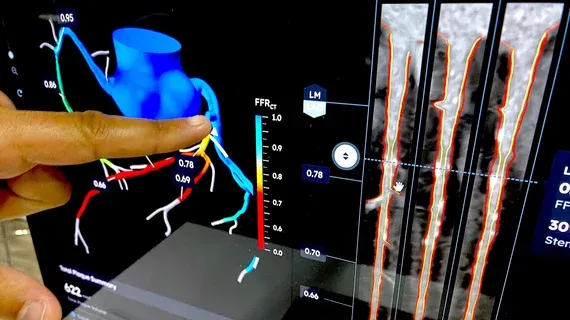
Heartflow's AI Plaque Analysis software leads to significant improvements in cholesterol management and cardiac risk reduction in coronary artery disease patients.
Key Details
- 1DECIDE Registry, the largest prospective study of its kind, enrolled ~20,000 CAD patients at 30+ US clinical sites.
- 2Heartflow AI Plaque Analysis prompted treatment changes in over 50% of patients versus CCTA alone.
- 3Patients managed using the software saw mean LDL cholesterol reductions of 18.7 mg/dL.
- 4A 15% estimated reduction in cardiac event risk was observed for these patients.
- 5Significant management changes occurred even in patients with no calcified plaque.
- 6The AI provides individualized risk insights by quantifying and characterizing all plaque types, including non-calcified, soft plaques.
Why It Matters
This large-scale prospective evidence demonstrates that adding AI-based plaque quantification to CCTA can materially change patient management, with potential to reduce adverse cardiac events. These results highlight the growing role of imaging AI in personalizing cardiovascular care.

Source
Cardiovascular Business
Related News

•Radiology Business
Framework Assesses Real-World Financial Impact of Radiology AI Adoption
A new analysis presents a financial calculator for objectively assessing the return on investment (ROI) of implementing radiology AI solutions.

•Radiology Business
Study Finds Disparities in Access to Stroke Imaging AI Tools
Research shows access to AI stroke detection tools is concentrated in resource-rich hospitals despite Medicare incentives.

•Cardiovascular Business
AI Is Quietly Embedded in Cardiac Imaging Workflows
AI is now seamlessly integrated into cardiac imaging, often unnoticed by clinicians.