
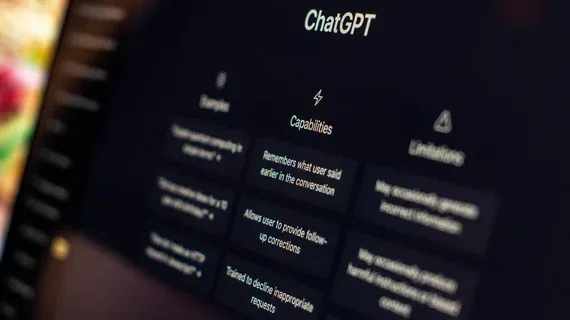
Recent research evaluates improvements in large language models for radiology tasks, revealing both progress and ongoing limitations.
Key Details
- 1LLMs like ChatGPT have been used since late 2022 for radiology tasks such as report generation and patient communication.
- 2Multiple tech companies have released LLMs tested specifically for radiology use cases.
- 3Performance of LLMs remains variable, requiring significant medical oversight when deployed in clinical contexts.
- 4Experts from UCLA published new findings in Academic Radiology assessing contemporary LLM performance for radiology tasks.
- 5Continuous evaluation is needed to ensure LLMs provide accurate and reliable information in medical scenarios.
Why It Matters
Robust LLMs could transform many facets of radiology through automation and improved communication, but reliability concerns underscore the need for careful integration and monitoring. Ongoing research will guide safe, effective adoption of AI tools in radiology workflows.
Source
Health Imaging
Related News

•Radiology Business
Framework Assesses Real-World Financial Impact of Radiology AI Adoption
A new analysis presents a financial calculator for objectively assessing the return on investment (ROI) of implementing radiology AI solutions.

•Radiology Business
AI Technique Unveils Previously Hidden MS Gray Matter Lesions on MRI
Researchers developed an AI-enhanced method to detect previously invisible gray matter lesions in multiple sclerosis using MRI.

•Radiology Business
Majority of Patients Want Disclosure When AI Used in Imaging
A new survey finds that nearly all patients want to be informed when AI is utilized in medical imaging interpretation.